Menu

miércoles, 14 de julio de 2021

Vía Torrijo, Tobazo, Canfranc, Huesca

Torrijo Route, South Face of the Tobazo, Canfranc, Huesca

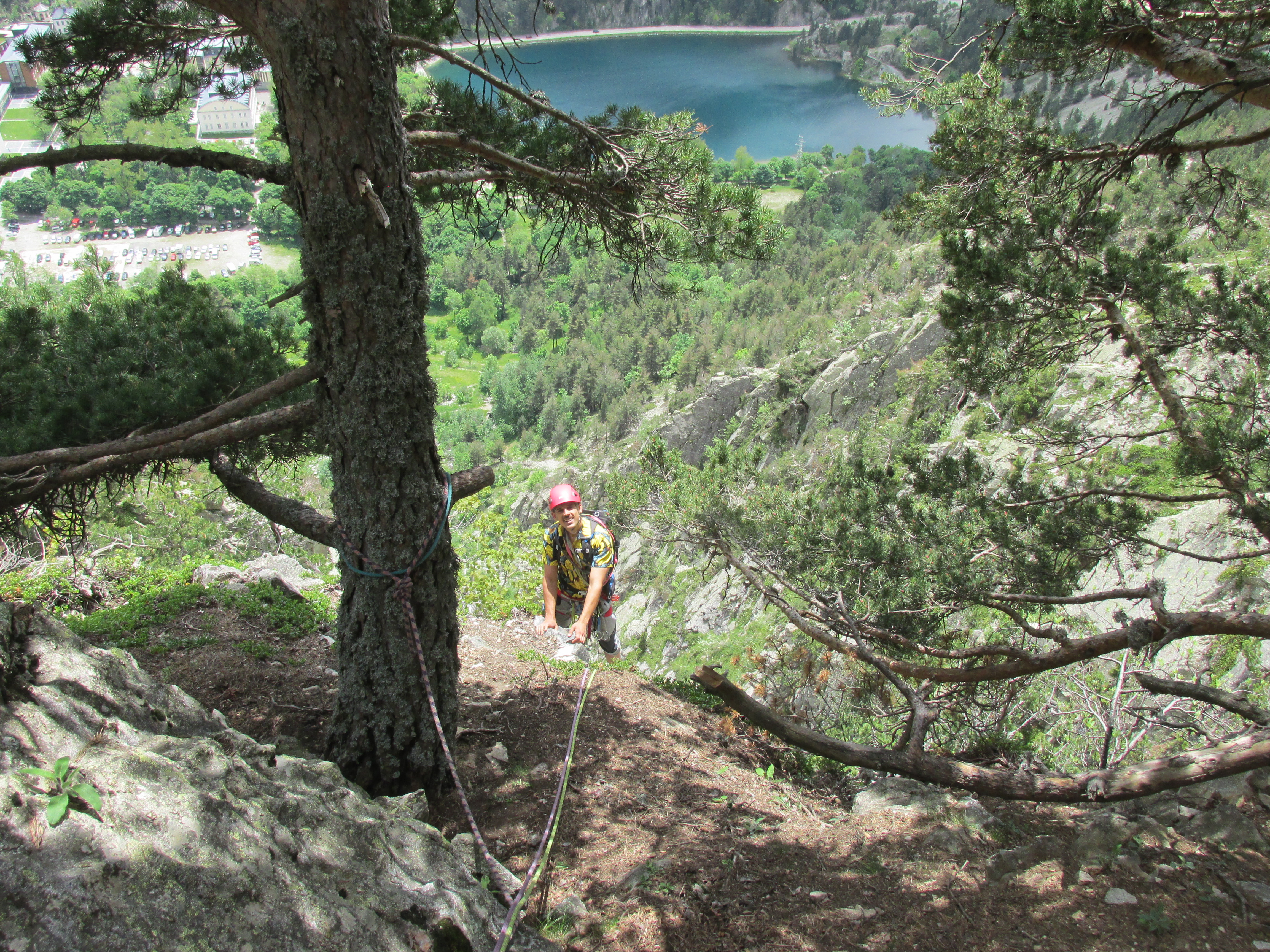
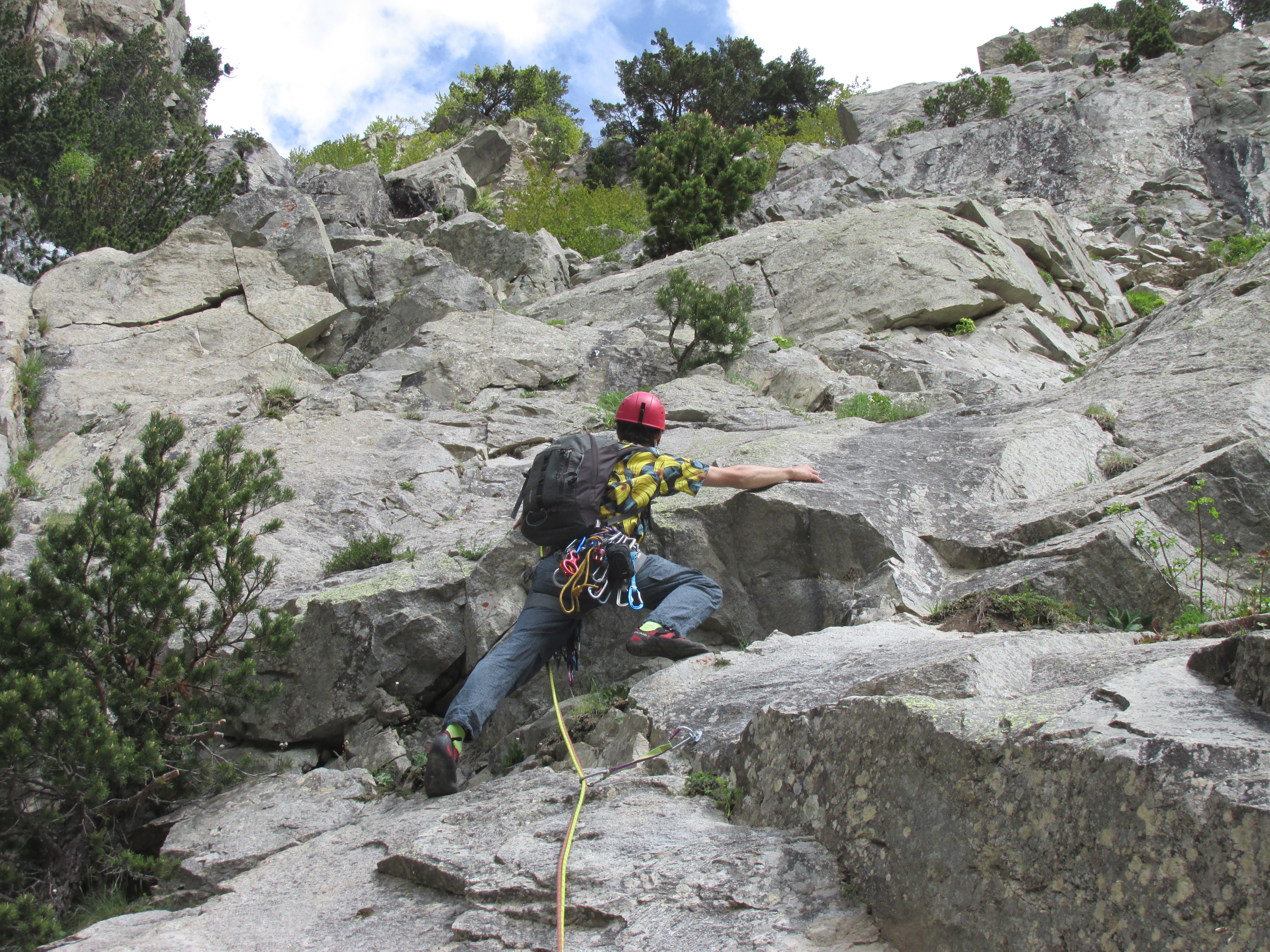
Un año más vuelvo a la cara sur del Tobazo en el Barranco de Rioseta, esta vez para realizar la vía Torrijo, una vía de corte alpino con un grado máximo 6b “humano”, equipada completamente con parabolt.
One more year, we went back to the South face of Mt Tobazo in Rioseta Canyon. This time we chose the route Torrijo, an alpine route with a maximun  rate of a “human 6b”. The route is completely belayed with bolts.

Esta vez fuimos dos cordadas, la hawaiana formada por Diego, mi padre Eduardo y un servidor. Y la formada por Flor, la administradora de @pirineosadventures, su hermana Paloma y su padre Fernando.
This time there were two teams, the hawaiian one formed by Diego, my Eduardo and me. And the squad formed by Flor, the admin of @pirineosadventures, her sister Paloma and Fernando, their dad.

Aproximación: La vía se encuentra detrás del campamento militar de Rioseta, a la izquierda de la vía valle de Canfranc. Hay una cinta con el nombre de la vía.
Access: The route is located behind the military camp of Rioseta, on the left hand side of the route “Valle de Canfranc”. There is a ribbon with the name at the start of the route.


Vía / Route:


Largo 1 (60 metros, 3b): Gradas herbosas con alguna plaquita. 
1st Pitch (60 meters, 3b): Grassy steps and some small slabs.
 
Largo 2 (60 m, 4a): Gradas herbosas al comienzo (2 segs), seguidas de una placa de adherencia muy tumbada (4 segs), situada la izquierda de un diedro. 
2nd pitch (60 m, 4a): Grassy steps at the beginning (2 bolts), followed by a very laid slab (4 bolts), it is located on the left of a dihedral.
 
Los 2 primeros largos son evitables / The first 2 pitches are skippable

Largo 3 (35 metros, 5c): Placa tumbada fácil al comienzo (1 seg). Luego una placa que parece más sencilla de lo que es, muy bien asegurado (7 segs). Reuniónen la base de diedro vertical.
3rd Pitch (35 meters, 5c): Lied slab at the beginning (1 bolt). Afterwards another slab that it looks easier than it is, really well belayed (7 bolts). Belay station at the base of a vertical dihedral.
 
Largo 4 (25 m, 5b): Empieza por un diedro vertical con agarres. Luego un pequeño techo con bueno agarres y bien asegurado, que se pasa muy bien con la ayuda de un pino. Últimos metros, una placa vertical bastante fácil. 
4th Pitch (25 meters, 5b): It starts on a vertical dihedral with good holds followed by a small roof with good holds, well belayed and easily climbable with the help of a pine. The last few meters is a quite easy vertical slab.
 
Largo 5 (35 metros, 4b): Salir de la reunión hacia la derecha para llegar a un tramo de placa. Luego gradas herbosas, hasta la reunión.
5th Pitch (35 meters, 4b): Leave the belay station to the right, to get to an another slab, afterwards there is a grassy area until the belay station.

Largo 6 (45 metros, 6b o A0/5a): Muro vertical de unos 8 metros al comienzo, donde está el PASO TOP de la vía. En libre puede salir 6b, yo lo liberé lo que significa que es HUMANO, aunque en A0 se hace muy cómodamente, sin estirarse. Luego la dificultad baja mucho. La vía sigue por una especie de diedro (4a) y al final por unas gradas con alguna que otra paquita (4b- 5a). Los últimos 15 metros son de hierba.
6th Pitch (45 meters, 6b or A0/5a): The pitch starts on a vertical wall of about 8 meters, where the CRUX of the route is. It is 6b, but it can be free climbed, in fact I did it, which means it is for HUMANS. On the other hand it can be easily aid climbed. Afterwards the difficulty drops a lot. The route continues on a dihedral (4a) followed by a few slabs (4b-5a). The last 15 meters are a grassy area.
Largo 7 (30 metros, 6a): Muro algo vertical con canto que se deja escalar en los primeros. Hay que fiarse de los pies. Largo precioso si eres de los que te gustan las placas. 
7th Pitch (30 meters, 6a): Vertical wall that gets harder and harder. You have to trsut your feet. Beautiful pitch if you like slab climbing.
 
Largo 8 (20 metros, 4b): Largo vertical que no presenta ninguna dificultad. Reunión a la derecha de un pino. 
8th Pitch (20 meters, 4b): Vertical pitch that is not a big challenge. Belay station on the right hand side of a pine.
Largo 9 (25 metros, 4b): Gradas con alguna plaquita más vertical hasta salir a una amplia zona herbosa debajo de un gran techo. El techo se evita por su derecha.
9th Pitch (25 meters, 4b): Vertical steps at the beginning until reaching a grassy area bellow a roof. The route misses the roof going right.

Se pueden unir L8 y L9 / Pitch 8 and 9 can be linked

Largo 10 (30 m, 4c): Rampa herbosa al comienzo y al final un espolón de roca con una panza vertical.
10th Pitch (30 meters, 4c): Grassy area that ends on a buttress with a vertical bulge.
 
Descenso: Salir a la pista de la Tuca Blanca hasta donde termina la zona verde, allí hay un mojon indicando el sendero que baja por la glera.
Descent: Get to the road and walk on there until where the “green area” finishes, there is a boundary marker to show where the descending path starts.


sábado, 26 de junio de 2021

Vía del Ibón, Balneario de Panticosa, Huesca

 Ibon route, Balneario de Panticosa, Huesca

Una vez más en el Balneario de Panticosa, junto a Diego y mi padre.
Once again, I went to Balneario de Panticosa (Baths of Panticosa), with Diego and my dad, to rock climb “La vía del Ibón” (The route of the lake).

Vía abierta por Sendero Límite, tiene una longitud de 280 metros, repartidos en 7 largos con un grado máximo de V+. Se encuentra la pared que está encima del ibón que hay en la entrada del Balneario de Panticosa.
Route opened by the guys from Sendero Límite, it has a lenght of 280 meters divided in 7 pitches, the highest level is V+. The route begins just above the lake located at the entrance of the Balneario.

La vía está totalmente equipada con parabolt. Los mejores largos son el 2º, 4º y 5º.
The route is completely belayed with bolts. The best pitches are the 2nd, the 4th and the 5th.

Aproximación: Acercase a la cascada de Argualás y seguir en horizontal hasta la pedrera marcada con hitos, subir hacia una zona desplomada de granito oscuro, la vía empieza a la derecha de los techos. Hay una cinta con el nombre de la vía en la base de la pared.
Access: Go to Argualás waterfall, from there the path goes horizontally following the boundary markers until the scree, where it starts to go up towards a dark granite overhung walls, the route starts at the right of those granite walls. There is a strap with the name of the route at the basement of the route.


Vía / Route:


Largo 1 (35 metros, V): La vía empieza en terreno fácil, le sigue un diedro en travesía hacia la izquierda.
1st Pitch (35 meters, V): The route starts in as easy area followed by a dihedran in traverse to the left.

Largo 2 (40 metros, IV): Travesía fácil con algún paso desplomado con buenas presas. Saliendo hacia la izquierda hasta llegar a la reunión.
2nd Pitch (40 meters, IV): Easy traverse with some overhung steps with good holds. Going left it reaches the belay station.

Largo 3 (40 metros, IV): El largo cuenta con varios muros situados a la derecha de un espolón.
3rd Pitch (40 meters, IV): The pitch has a few walls located on the left of a buttress.

Largo 4 (40 metros, V-): Muro vertical que continua por una zona más sencilla que lleva a otro muro vertical que lleva a la reunión.
4th Pitch (40 meter, V-): Vertical wall followed by an easier part that leads to another vertical wall that reachs the belay station.

Largo 5 (40 metros, V+): Empieza en un paso vertical, continuar por terreno más sencillo, hasta llegar a la base de un muro. Aquí está el paso de la vía, un tramo de pequeñas presas con liquen, muy bien equipado.
5th Pitch (40 meters, V+): Starts in a vertical step, continue on simpler terrain, until it reaches the base of a wall where the crux of the route is, a stretch of small holds with lichen, but very well belayed.

Largo 6 (40 metros, IV+): Corto paso atlético para salir de la reunión, continuar por un tramo escalonado, hasta llegar a una placa fisurada con liquen.
6th Pitch (40 meters, IV+): Short but athletic step to leave the belay station, carry on throught a stepped section to reach a cracked slab with lichen.

Largo 7 (40 metros, IV+): Muro tumbado al que sigue un terreno herboso y escalonado.
7th Pitch (40 meters, IV+): Lied slab followed by a grassy and steeped section.

Descenso: Desde el final de la vía, seguir los mojones durante unos 50 metros, para llegar a un pequeño sendero que lleva al barranco de Argualas, una vez cruzado el puente el camino se une con el sendero principal.
Descent: From the end of the route, follow the boundary markers for about 50 meters, to get to the path that leads to barranco de Argualas (Argualas Canyon), after crossing the bridge, it links with the main path.


viernes, 25 de junio de 2021

Vía el Clan de los Martes, Balneario de Panticosa, Huesca

Clan de los Martes Route, Balneario de Panticosa, Huesca

Esta vez Diego, Vicky, mi padre Eduardo y yo pusimos rumbo al Balneario de Panticosa, para escalar la vía "El Clan de los Martes", abierta por Sueño Vertical.
This time, DiegoVicky, my dad Eduardo and me headed to Balneario de Panticosa (Baths of Panticosa), to rock climb the route "El Clan de los Martes" (Tuesdays Clan), opened by the guys from Sueño vertical.

Vía / Route:

Vía totalmente equipada con parabolts, llevar 15 cintas preferiblemente largas (cordinos). Recomendable cuerdas de 50 metros. Todas las reuniones son cómodas.
Route completely belayed with bolts, take 15 quickdraws, long if it is possible and straps. Advisable 50 meters rope. Very confortable belay stations. 

Aproximación: En 10 minutos desde el aparcamiento. Seguir el camino de la pista de fondo y antes de  llegar al puente seguir los mojones.
Access: In 10 minutes from the car park. Follow the crosscountry skiing track. and just before the bridge follow the boundary markers.


Largo 1(40 metros, V): Subirse a un gran bloque próximo a la primera pared, una placa con buenos agarres y buena roca pero con algo de liquen.
1st pitch (40 meters, V): Jump on the ludge next to the wall to get to the first wall, a slab with good holds and good quality rock but with a bit of lichen.

Largo 2 (50 metros, 6a(V+/A0)): El largo más difícil de la vía, tiene dos resaltes de 6a (V+/A0). El resto puede ser IV. Largo en diagonal donde hay que gestionar bien el roce de la cuerda.
2nd Pitch (50 meters, 6a(V+/A0)): The hardest pitch of the route, it has two 6a (V+/A0) parts which are the crux of the route. The rest of the pitch is IV. It is advisable to use long straps and quickdraws to avoid the graze of the ropes.

Largo 3 (50 metros, III+): Largo horizontal que tiende a subir en la última parte.
3rd Pitch (50 meters, III+): Horizontal pitch that tends to go up on the last part.

Largo 4 (50 metros, V+): Largo con tramos de escalada en placa muy bonitos, que tiene un par de pasos de V/V+.
4th Pitch (50 meters, V+): Pitch with few sections of really enjoyable slab climbing, it has a couples steps of V/V+. 
 
Largo 5 (40 metros, IV): Empieza en una canal fácil, una vez superado la vía va hacia la izquierda  llegando a un árblo con doble punto de anclaje, tras el árbol hay una una placa, la reunión se encuentra en la cima de esta.
5th Pitch (40 meters, IV): It starts on an easy water groove, once on top the route goes to the left reaching to a tree in which there are 2 belaying points to click, after the tree there is an easy wall, the belay station is located on top of it.

Largo 6 (25 metros, III): Descender un poco desde la reunión. El resto del largo es fácil, pero va con un barranco terreso y resbaladizo, hay una cuerda fija. La reunión en árboles tras la cuerda fija.
6th Pitch (25 meters, III): Climb down from the belay station. The rest of the pitch is easy, but it goes on an earthy and slippery cliff, there is a permanent rope. Belay station on the trees just after the permanent rope.

Largo 7 (25 metros, IV+): Largo muy bonito que va por un muro vertical. Reunión en los árboles de la cima. Recomendable montar reunión en el segundo árbol, ya que es más comodo
7th Pitch (25 meters, IV+): Really good pitch that goes on a vertical wall. Belay station on the trees on the summit, it is advisable to set the belay station on the second tree, as it is in a more confortable slab.

Descenso / Descent: 


Subir siguiendo el borde del barranco hasta la cima, hay algún mojón. Cruzarlo y seguir subiendo una pendiente de hierba por la zona más despejada, y sin alejarse mucho del barranco, en 5 minutos hasta llegar al sendero principal.
Climb up the hill next to edge of the canyon until reaching the top, there are a couple boundary markers. Once at the top, cross the canyon and carry on climbing up through a grassy but not as bushy hill, but without going far from the canyon, in 5 minutes you will reach the main path.


martes, 8 de junio de 2021

Vía Víctor García, Mallo Colorado, Riglos, Huesca

Víctor García Route, Mallo Colorado, Riglos, Huesca

Como decían que el tiempo iba a empeorar a medio día, DiegoAdrián y yo decidimos ir de todas formas y hacer una ruta rápida.
As the forecast said the weather was going to get worse at noon. DiegoAdrián and me met anyway, and decided to climb a quick route in Riglos.


Elegimos la vía Víctor García al mallo Colorado, una vía de “6a humano” compuesta de 4 largos.
We choose the route Victor Garcia on the Mallo Colorado, a "human 6a" route which has 4 pitches. 

Vía / Route:


Largo 1 (30 metros, 6a): La vía sube recto superando unas cuantas panzas de 6a.
1st Pitch (30 meters, 6a): The route goes up straight going over a few 6a bulges.

Largo 2 (30 metros, V): Largo vertical con muy buenos agarres y muy disfrutón.
2nd Pitch (30 meters, V): Vertical and really enjoyable pitch with very good holds.

Largo 3 (20 metros, II): Largo muy fácil, se puede caminar.
3rd Pitch (20 meters, II): Really easy pitch that can be done walking.

Largo 4 (20 metros, V+): Largo vertical, con una panza de V+ al principio del largo, llega a la cima.
4th Pitch (20meters, V+): Vertical pitch with a V+buldge at the beggining of the pitch. It reaches the top.

Descenso: Rápel desde la sabina localizada al otro lado del Mallo.
Descent: Abseiling down from the savine located on the other side of the Mallo.